

Issues
What are Cargill and DMB proposing?
In 2009, Arizona luxury housing developer DMB Associates submitted an application to Redwood City to build the "Saltworks Project" on 1,436 acres of salt ponds owned by agribusiness giant Cargill, Inc. The project required bayfill to construct 8,000 to 12,000 housing units and 1 million sq. ft. of commercial/office space on two square miles of salt ponds currently designated as "Open Space" in the City's General Plan.
In May 2012, after the City received over 3,000 individual scoping comments in response to the Saltworks application, Cargill and DMB withdrew their pending application. At the same time, they announced that they would return with a revised development plan for the salt ponds. Such a revised plan has yet to be submitted to the City.
Details about the 2009 project are available in the project application on the City's website.
We have also created a whole list of additional links for those that want to dig even further into the specifics.
Click here to visit our list of website links.
Why is development on the salt ponds bad for Redwood City?
Cargill and DMB are trying to mask the real impacts of their development plans by making promises to every special interest in town. Yet they have consistently ignored and frequently misled us on some of the most important issues we care about, such as:
Click to jump to a specific issue:
Traffic Gridlock
Uncertain Water Supply
Increased Costs to Residents
Economic Harm to Local Businesses
Housing in the Wrong Place
Loss of Restorable Wetlands
We Have a Choice!
Traffic Gridlock
Our commutes just get worse every year. Adding more houses to the east side of Highway 101 – without easy access to existing public transit – will only make things worse, much worse. Our roads are already at capacity, and City reports say Cargill’s new residents and commuters could turn Highway 101, Woodside Road, Marsh Road, and Whipple Ave. into virtual parking lots1.
In order for the Saltworks proposal to be feasible, the project included a new roadway parallel to Highway 101 with major connections at Marsh Road, Woodside Road, and Whipple Avenue. But the City's Initial Study for the Saltworks Project says this plan has "significant challenges related to required property acquisition, maintenance of access to adjacent properties, and integration with the existing roadway network.” The Study goes on to say that "existing interchanges on Highway 101 are operating near or at capacity and the freeway is currently at capacity near the Project site."
It's not just the freeway that will be impacted by development on the salt ponds. Our City's General Plan says that both the Woodside Road and Whipple Avenue key corridors are operating at capacity or over capacity, and that "they do not currently have excess capacity to absorb Project traffic."
Instead of dumping more traffic on Highway 101 and creating gridlock on our community's streets, shouldn't we stick with our current plans for building housing near existing public transit?
Uncertain Water Supply
Maintaining a reliable, sustainable supply of water is one of the biggest issues we face. Redwood City is struggling to meet current water demand and faces water supply challenges in the coming years 2. Redwood City’s plans for growth do not include providing water for residents and businesses on the salt ponds.
So, how do Cargill and DMB propose to supply water for their development? There is no realistic plan.
Cargill and DMB first proposed drilling wells under the salt ponds and taking water from the aquifer. Their own consultants cautioned against that plan, and it was quietly and quickly abandoned.
Their second plan called for DMB to pull off a complex and unprecedented set of trades and transfers to bring their Kern County agricultural water to Redwood City; however, this plan would depend on the cooperation of a regional water district that handles both Delta and Hetch Hetchy water. Two water districts have publicly announced that they are opposed to helping DMB implement the transfer.3
Even more alarming is the fact that DMB's rights to the Kern County water are only good for 35 years, with an "option" for 35 more. The City's Initial Study for the Saltworks Project says that after the applicant's right to this water expires, "the source of the potable water for the project is unknown," but that the Saltworks Project might want to purchase water from Redwood City at that time.
Desalination has also been mentioned as a possible source of water for Cargill and DMB’s development; however, desalinated water is substantially more expensive than traditionally sourced water. Redwood City residents could find themselves eventually subsidizing this expensive water for Cargill's development project. And where would this industrial desalination plant be located? A site in the Redwood Shores community across from the National Wildlife Refuge is one location that has been considered.
All of these plans for supplying water to an unnecessary development are reckless and without merit. Approving this kind of development without a clear and realistic plan for a secure supply of water puts all of us at risk for severe water rationing, higher water bills, or worse.
Increased Costs to Residents
We're worried that development on the salt ponds could leave Redwood City with a financial mess that we will have to clean up. Cargill and DMB’s economic promises sound too good to be true. From maintaining new levees and providing transit to the project, to securing a long-term water supply and building and operating the schools, Cargill and DMB’s plans could be heavily reliant on public subsidies. After Cargill and DMB are gone, what kind of bills are Redwood City taxpayers like you and me going to be stuck paying?
The best illustration of the public subsidies Cargill and DMB are hoping for is in their 2009 application's proposed transit system. If you look at the map they submitted to the City, you will see the phrase “City Extensions.” These “City Extensions” are absolutely critical transit lines necessary for their project’s system to function – lines that currently do not exist, and that the developers were hoping the City would pay for. Isn’t it likely that any revised project would similarly rely on public subsidies funded by Redwood City taxpayers?
The City's Initial Study for the Saltworks Project raised a number of red flags about the project’s "potentially significant" impacts to services and existing public facilities:
- The Saltworks Project was not included in the planning for the South Bay Sewer Authority's Capital Improvement Project, which is being paid for by current ratepayers in the monthly sewer service charge. The Project "may generate a demand for wastewater treatment that exceeds the capacity of the existing SBSA treatment facility."
- Up to 39 new police officers would have been required to serve the Saltworks Project, and additional demands would be placed on Fire Department staffing and equipment.
- "The acreage set aside for schools may not be sufficient to support the proposed project." More importantly, there was no provision in the Saltworks Project to ensure that all operating costs for the new schools would be adequately covered, which is a critical issue for Redwood City's elementary schools.
- "Increased use of existing recreational facilities by Project residents and employees may cause further and accelerated physical deterioration of facilities." More wear and tear on city parks like Red Morton, at our expense?
These examples make it abundantly clear that Cargill and DMB would likely expect Redwood City to foot the bill for much of their plans. It would be naïve to think that any revised development plan would be free of similar public subsidies.
Back to Top
Economic Harm to Local Businesses
Our community has put a lot of time and resources into revitalizing our downtown. Cargill and DMB’s initial project called for a completely separate commercial district on the east side of Highway 101.4 What would this do to our efforts to make our existing downtown better? How would putting residents and competing restaurants, shops, and entertainment venues on the salt ponds fill all those empty storefronts downtown? Clearly Cargill and DMB are not concerned with the ongoing viability of existing Redwood City businesses.
Additionally, any salt pond development plan would put housing, businesses, and schools next to the Port and heavy industries along Seaport Boulevard. Seaport Boulevard businesses say placing houses and schools next to heavy industry just doesn’t make sense – and threatens this vital economic center. 5
According to the City's Initial Study, "The Seaport Industrial Association has expressed concern about the compatibility of the Project with adjacent Port and other industrial uses; the Association indicates that additional restrictions related to noise, dust, and night-lighting could potentially affect the viability of existing Port and other industrial uses adjacent to the Project site."
The Port, the Seaport Industrial Association, and a number of businesses in the area all submitted Scoping Comment letters to the City listing numerous potential economic impacts if the proposed residential development is built. Here are some of their expressed concerns:
- The close proximity of incompatible residential and industrial land uses would lead to conflicts and complaints, to the detriment of the businesses in the area;
- The new roadway to Whipple Avenue would result in eminent domain being forced on property owners, and impacts to business accessibility;
- Increased traffic on Woodside Road, Blomquist, and Highway 101 would interfere with the transport of goods to and from businesses and affect customer access; and
- More truck/car interactions on area streets could cause serious traffic hazards.
There are good economic reasons why our City's General Plan has a policy that says we need to "protect long-term Port, Port-related, and surrounding industrial uses from the encroachment of incompatible uses." Anything less would be irresponsible.
Housing in the Wrong Place
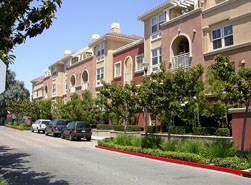
Redwood City's goal for future growth is to foster not just economic prosperity, but also a shared sense of community, an exciting and vibrant downtown, and the appreciation of our natural environment. The city's new General Plan serves these goals and meets our housing needs by placing over 9,000 new homes in the heart of our city — downtown and along existing transit corridors, near shops and restaurants. Builders are already lining up to make this happen. For instance, 201 Marshall, a new apartment community in the heart of downtown, near the Caltrain station, is now under construction.
In contrast, Cargill and DMB want to focus most housing growth in our city over the next 30 years on an isolated parcel east of Highway 101, far from existing public transit, adjacent to heavy industry, and sitting at or below sea level where it will need to be protected by flood levees. Do Cargill and DMB really think this is the best place for our children to live, or are they simply looking out for their own economic interests?
The City's Initial Study for the Saltworks Project says that housing and structures would be placed within a 100-year flood zone at risk from flooding "as a result of the failure of a levee." Since regional liquefaction hazard mapping indicates that a major rupture on the San Andreas Fault could result in moderate to high liquefaction on the salt ponds, this really is risky business.
The Initial Study includes a sobering list of other geological hazards for the salt ponds:
- The presence of a potentially active earthquake fault crossing the site;
- Susceptibility to very strong to violent seismic shaking from an earthquake on the San Andreas Fault;
- Lateral spreading and sloughing of a potential levee from strong seismic ground shaking; and
- Differential settlement, subsidence, expansive soils and erosion.
Why build on bayfill and put people in harm's way behind levees when our General Plan provides alternative locations for our community's housing?
Affordable Housing
DMB is well known for building luxury housing, and that's what they would deliver to Redwood City. But is this really what families in Redwood City need?
Unfortunately, the Cargill salt pond site is directly adjacent to one of Redwood City's truly affordable neighborhoods, with over 600 mobile homes. The City's Initial Study says these homes would be at risk from a development like the Saltworks Project because it could "increase pressure to redevelop surrounding properties, including the mobile home parks, resulting in potential impacts to existing housing and the people living in those units."
Would our community actually suffer a net loss of truly affordable housing if this project were built?
Loss of Restorable Wetlands
Healthy wetlands are a vital part of the San Francisco Bay ecosystem. They provide natural flood control, filter the toxins out of our water, protect us from storm surges and sea level rise, and offer great recreational opportunities. An estimated 90% of the Bay's wetlands have already been diked or filled in for development, and scientists tell us that we need at least 100,000 acres of wetlands for the Bay to thrive. 6
Cargill has been harvesting salt from their property for decades and they should continue into the future if they so choose. Like salt ponds throughout the Bay, the Redwood City salt ponds actually provide very valuable habitat for thousands of migratory shorebirds and other wildlife, even in their current state. (7)
But development on the salt ponds would forever destroy any opportunity to restore over 1,000 acres of wetlands that we need to improve the health of the Bay, and provide critical habitat for endangered wildlife. In fact, this entire site is within the designated expansion boundary for the Don Edwards National Wildlife Refuge because of it's proximity to other refuge lands, and it's importance for potential restoration of tidal marsh. Like the La Riviere Marsh in Fremont, even former crystallizer ponds can be restored with renewed tidal flow from the Bay. The Port of Redwood City would benefit too by having a nearby location for depositing dredge material, which is important for marsh restoration and to mitigate sea level rise.
The City's Initial Study documented numerous potential adverse impacts from the Saltworks Project to threatened and endangered species, a sensitive natural community, federally protected wetlands, wildlife corridors, and aquatic nursery sites. How would the noise, vibration, and dust from construction impact birds in the adjacent marshes and sloughs of the Don Edwards National Wildlife Refuge?
Isn't it the Redwood City community's responsibility to speak up for our part of the Bay?
We have a choice!
Redwood City has no obligation to even consider any future application from Cargill for development on the salt ponds. The site has been designated as Open Space and zoned “Tidal Plain” in the City's General Plan the entire time Cargill has owned it. Unless we give Cargill permission to change the land use and zoning, they have no right to build this project. Cargill bought the property at salt pond prices and they have paid a reduced Open Space Preserve property tax rate for decades. Now they want the city to let them develop the site so they can make luxury-housing profits.
Do we want to risk traffic gridlock, our water supply, our city’s economic resources and our downtown – not to mention our Bay – so that Cargill and DMB can make a huge profit before they leave town?
It is simply inappropriate and unnecessary to grow our City on the salt ponds. Redwood City has a plan for meeting our housing needs. Our recently adopted General Plan puts new homes and businesses in our downtown and along transit corridors, near shops and restaurants. There is broad community support for the General Plan and builders are already submitting applications for projects. See the list of current projects for yourself on the City's website.
Redwood City doesn't have the capacity to absorb the impacts from doing both—it's that simple. So do we want to continue implementing our community's bold vision as expressed in our General Plan – meeting our housing needs, revitalizing downtown, and protecting our environment – or do we want to put ourselves and our children at risk by placing our city’s future in the hands of Cargill and DMB?
Sources:
Primary source: The Notice of Preparation and Initial Study of the Saltworks Development Proposal (Oct 2010)
1 The “Tier 1” Report on Transportation, commissioned by the City of Redwood City says that, "the existing interchanges on US 101 are operating near or at capacity and the freeway is currently at capacity near the Saltworks site." The report predicts as many as 80,000 new car trips per day if the project is approved. (Fehr & Peers, Jan. 2010, pages ii, 9, 11)
2 Even without including the Saltworks’ project, Redwood City’s new General Plan predicts that by 2020, Redwood City’s water demand will exceed its supply from the Hetch Hetchy system.
3 “Water Agency Leaders Oppose Deal for Proposed Cargill Redwood City Development”, San Jose Mercury News, August 24, 2011.
4 At the center of Cargill and DMB’s proposed Saltworks project is an area they call the “Village Center.” The project proposal includes over a million square feet of office and retail, and the developers say it will include shops, restaurants and entertainment venues. For more information, read “Redwood City: Ready for explosive population growth?” by former planner Mark Bartholomew. Published in the San Mateo Daily Journal August 25, 2010.
5 “Salt pond development a real threat to Redwood City’s Port”, by Mike Jacob, Vice-President of the Pacific Merchant Shipping Association. Published in the Palo Alto Daily News, September 12, 2009.
6 SF Bay Habitat Goals Report, San Francisco Estuary Insitute, 1999.
7 Staff Report on Salt Ponds, San Francisco Bay Conservation and Development Commission, October 2005